
Choosing the wrong pump can be one of the most expensive mistakes you’ll make in an industrial operation. I’ve seen facilities struggle with frequent breakdowns, skyrocketing energy bills, and unexpected downtime because someone picked a pump based on price alone or didn’t fully understand their application requirements. The truth is, selecting the right industrial pump isn’t just about moving fluid from point A to point B. It’s about finding the equipment that will do the job efficiently, reliably, and cost-effectively for years to come.
At AMED-US, we work with plant managers, engineers, and procurement officers across industries like asphalt production, wastewater treatment, and chemical processing every single day. We’ve partnered with leading manufacturers including Grundfos, Viking, Baldor, ABB, and WEG to help our clients navigate the complexities of pump selection. Through these partnerships and decades of collective experience, we’ve learned that making the right choice upfront saves money, prevents headaches, and keeps operations running smoothly.
This guide walks you through everything you need to consider when selecting an industrial pump, from understanding your fluid properties to matching the right pump type to your specific application.
Understanding Your Application Requirements
Before you even start looking at different pump models, you need to have a crystal-clear picture of what you’re actually pumping and where it needs to go. This might seem obvious, but I can’t tell you how many times we’ve had clients call us after purchasing the wrong equipment because they skipped this fundamental step.
Fluid Properties That Matter
The characteristics of your fluid dictate almost everything about your pump selection. Temperature affects viscosity, and viscosity affects how your pump performs. For example, water flows easily at around 1 centipoise, but as you move into lubricating oils at 100-200 centipoise or heavier materials reaching thousands of centipoise, you’re looking at completely different pumping requirements.
Viscosity isn’t static either. Many fluids become thinner as temperature increases, which means the pump you need for cold startup might be different from what you need during normal operations. We always recommend checking fluid properties at actual operating temperatures, not just what’s listed on a data sheet at room temperature.
Chemical composition matters just as much. Corrosive chemicals, abrasive slurries, and fluids with suspended solids all place different demands on pump materials and design. A pump handling acidic solutions needs corrosion-resistant materials like stainless steel, while abrasive slurries might require hardened components or specialized coatings.
Flow Rate and Pressure Requirements
You need to know both your minimum and maximum flow requirements. Are you moving 10 gallons per minute or 1,000? The answer dramatically changes which pump category you should even be considering. Centrifugal pumps excel at high flow rates with moderate pressure, typically handling large volumes efficiently. However, if you need precise volumetric control regardless of system pressure, positive displacement pumps become the better choice.
Pressure requirements work hand-in-hand with flow. Your system might need high pressure to overcome elevation changes, push through filters, or meet process requirements. Understanding both the static head (elevation difference) and dynamic head (friction losses in piping) helps determine the total head your pump must generate.
Operating Environment and Safety Standards
Where will this pump operate? Temperature extremes, hazardous locations, and outdoor installations all influence pump selection. A pump that works perfectly in a climate-controlled facility might fail rapidly when exposed to freezing temperatures or direct sunlight.
Safety and regulatory compliance can’t be afterthoughts. Fire pumps must meet NFPA standards. Pumps handling potable water need food-grade materials approved for contact with drinking water. Chemical processing applications might require explosion-proof motors or special sealing systems to prevent leaks of hazardous materials.

Types of Industrial Pumps and Their Applications
The industrial pump world essentially breaks down into two major categories: dynamic pumps (primarily centrifugal) and positive displacement pumps. Each category includes numerous subtypes designed for specific applications, and understanding these differences is crucial for making the right selection.
Centrifugal Pumps
Centrifugal pumps dominate industrial applications for good reason. They’re reliable, relatively simple, and highly efficient for moving large volumes of low-viscosity fluids. The rotating impeller creates centrifugal force that accelerates fluid outward, increasing both pressure and flow rate.
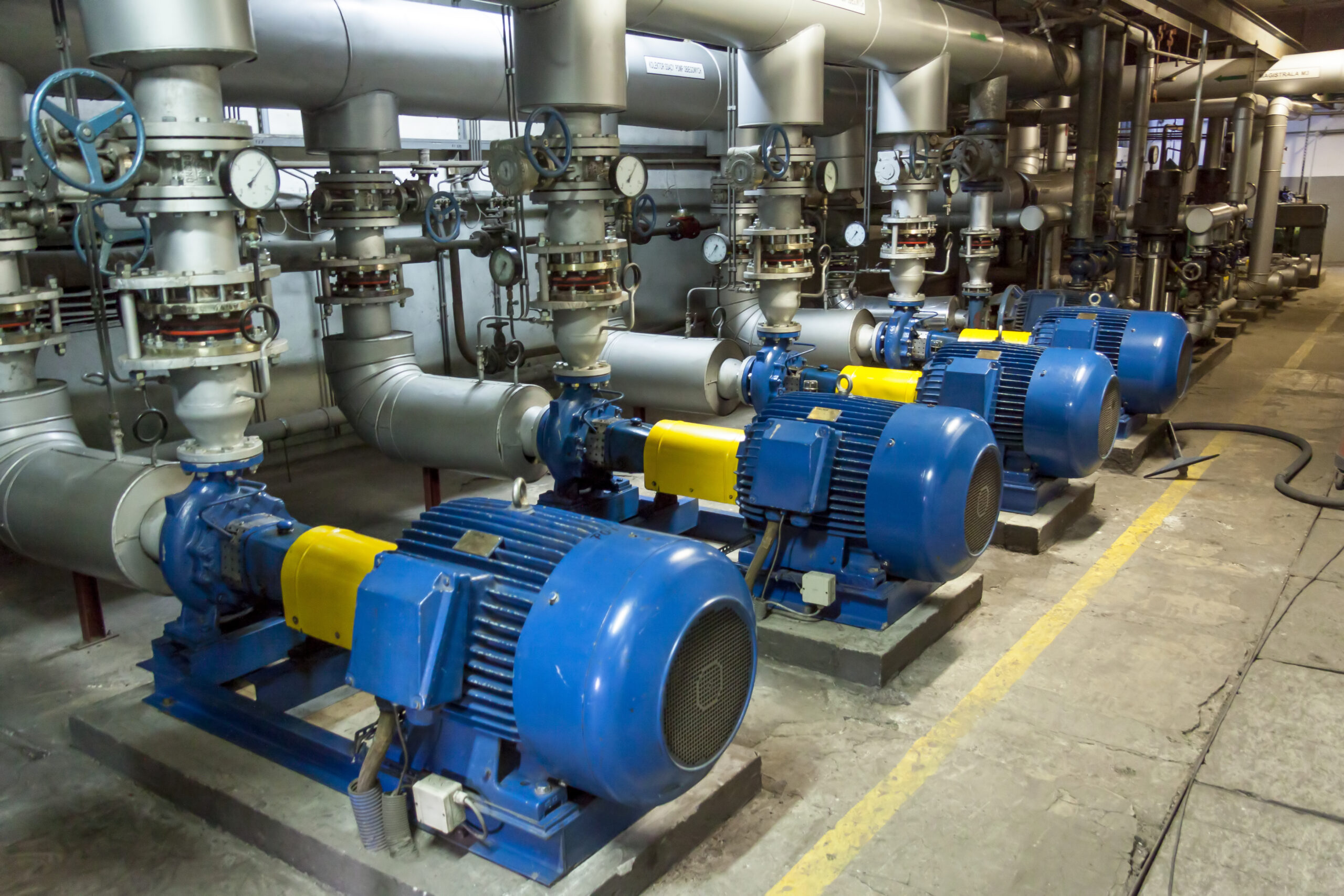
We see centrifugal pumps everywhere at AMED-US. They’re the workhorses in water treatment plants, HVAC systems, and general industrial processes. Their simple design means fewer moving parts, which translates to easier maintenance and longer service life. They can handle fluids with some suspended solids, especially models with open impellers designed for this purpose.
However, centrifugal pumps have limitations. Performance drops significantly with viscous fluids. As viscosity increases above 100 centipoise, efficiency can plummet. They also struggle with precise flow control since their output varies with system pressure changes. For applications requiring exact metering or handling thick fluids, you need to look elsewhere.
Positive Displacement Pumps
Positive displacement pumps trap a fixed volume of fluid and force it through the system. This creates a pulsing discharge rather than the smooth flow of centrifugal pumps, but it also provides several important advantages.
The key benefit is consistent volumetric flow regardless of pressure changes. Whether system pressure is high or low, a positive displacement pump delivers nearly the same volume per cycle. This makes them ideal for metering applications where precise chemical dosing matters, like water treatment or pharmaceutical manufacturing.
These pumps handle viscous fluids far better than centrifugal designs. Gear pumps, rotary lobe pumps, and progressive cavity pumps can all move thick materials that would bog down a centrifugal pump. They’re common in applications involving oils, adhesives, polymers, and other high-viscosity substances.
The tradeoff is complexity. More moving parts mean more potential wear points and higher maintenance requirements. They also typically operate at lower speeds and flow rates than centrifugal pumps, making them less suitable for high-volume transfer applications.
Specialized Pump Types
Beyond the centrifugal and positive displacement categories, several specialized pump types serve specific niches. Submersible pumps work while fully submerged, making them perfect for dewatering, mining, and wastewater applications where the pump needs to be in the fluid. Their sealed design protects electrical components from water damage.
Air-operated double diaphragm (AODD) pumps use compressed air instead of electricity, which makes them safe in explosive environments. The flexible diaphragm design handles abrasive and corrosive fluids well, and they’re self-priming, which eliminates one common startup headache.
Peristaltic pumps squeeze flexible tubing to move fluid, which means the fluid never contacts pump components. This makes them perfect for applications requiring absolute cleanliness or when pumping expensive or dangerous chemicals that you don’t want contaminating mechanical parts.
At AMED-US, we maintain an extensive inventory of industrial pumps including centrifugal pumps, gear pumps, dosing pumps, fire pumps, and many other specialized types to meet diverse application needs.
Key Selection Factors
Getting the pump type right is just the start. Several other critical factors determine whether a specific pump model will actually work in your application.
Material Compatibility
I can’t stress this enough: the materials in contact with your fluid must be compatible with it. Pumping sulfuric acid through a cast iron pump won’t work. Corrosive chemicals typically require stainless steel, exotic alloys, or plastic components. Abrasive slurries might need hardened steel or ceramic surfaces.
Don’t forget about seals and gaskets. These wear items often fail before pump housings do, especially if they’re not rated for your fluid type. We always verify that every wetted component, from impellers to seals to O-rings, can handle the fluid chemistry at operating temperatures.
Energy Efficiency
Pump efficiency directly impacts your electricity bill, and given that pumps often run continuously, those costs add up fast. A pump operating at 70% efficiency versus 80% efficiency might cost thousands of dollars more per year to operate, depending on horsepower and runtime.
Modern pumps are designed for maximum efficiency at their rated operating point. The key is matching the pump to your actual needs rather than oversizing “just to be safe.” An oversized pump forced to run throttled or with flow restrictions wastes energy and can cause premature wear from operating outside its optimal range.
Variable frequency drives (VFDs) can help optimize energy usage by adjusting motor speed based on actual demand rather than running at full speed all the time. For applications with varying flow requirements, VFDs often pay for themselves through energy savings alone.
Maintenance and Reliability
How easy is it to service the pump? Can you access wear parts without major disassembly? Are replacement parts readily available? These questions matter more than most people realize until they’re facing unexpected downtime.
We’ve seen operations shut down for days waiting for proprietary parts from overseas manufacturers. That’s why we partner with established manufacturers who maintain strong parts availability and service networks. A slightly more expensive pump that’s easy to maintain and has parts in stock often costs less over its lifetime than a cheap pump that requires extended downtime for repairs.
Consider the maintenance schedule too. Some pump types require weekly attention while others can run for months between service intervals. Your maintenance team’s capabilities and availability should factor into the decision.
System Integration
Your pump doesn’t exist in isolation. It needs to fit into your existing piping, work with your power supply, and integrate with control systems. Sometimes the “perfect” pump just won’t physically fit in the available space or requires electrical modifications that blow the budget.
Suction and discharge flange sizes need to match your piping or require appropriate reducers. Mounting requirements, whether foot-mounted, flange-mounted, or vertical installation, must work with your facility layout. These practical considerations can eliminate otherwise suitable options.
Common Mistakes to Avoid
After years of helping clients select pumps, I’ve noticed the same mistakes appearing repeatedly. Learning from others’ errors can save you considerable time and money.
Oversizing the Pump
The biggest mistake we see is deliberate oversizing. Engineers add safety factors on top of safety factors, resulting in a pump two or three times larger than necessary. The thinking is that bigger is safer, but oversized pumps cause real problems.
They operate inefficiently, wasting energy. They can cause excessive system pressure, leading to leaks and valve damage. The higher flow needs to be throttled back, which creates turbulence and accelerates wear. It’s often better to size correctly and add a backup pump for redundancy than to oversize the primary pump.
Ignoring Operating Conditions
Pump performance curves are typically based on water at room temperature. If you’re pumping anything else, those numbers don’t apply directly. Viscosity corrections for flow, head, and efficiency can be substantial. A pump that looks perfect on paper might deliver only 60% of expected performance with your actual fluid.
Temperature variations throughout the operating cycle matter too. A pump sized for normal operating temperature might struggle during cold startup when viscosity is higher. Consider your worst-case conditions, not just typical conditions.
Choosing Based on Price Alone
Yes, budget matters. But the cheapest pump upfront often costs more over time through higher energy consumption, frequent repairs, and premature replacement. We encourage clients to calculate total cost of ownership, including energy, maintenance, and expected lifespan, rather than just comparing purchase prices.
A quality pump from a reputable manufacturer with good service support might cost 30% more initially but last twice as long with half the maintenance costs. That’s a clear winner from a lifecycle cost perspective.
Working With AMED-US
Selecting industrial pumps doesn’t have to be complicated when you have the right partner. Our team of licensed engineers and technical specialists helps clients throughout the United States, Latin America, and the Caribbean find the right pumping solutions for their specific applications.
We represent leading global manufacturers including Grundfos, Viking, Sumitomo, Baldor, ABB, WEG, Ruhrpumpen, and others. This gives us access to a wide range of pump technologies and the flexibility to recommend the truly right solution rather than forcing a single brand to fit every application.
Our process starts with understanding your needs. We ask detailed questions about fluid properties, flow requirements, operating conditions, and your facility constraints. This information lets us narrow down pump options to those truly suitable for your application. We then provide detailed technical recommendations including performance curves, material specifications, and lifecycle cost estimates.
But our support doesn’t end with equipment delivery. We provide installation assistance, commissioning support, preventive maintenance programs, and 24-hour repair services when unexpected issues arise. With teams in Miami, Medellin, Santiago, and Guayaquil, we can provide localized support throughout the Americas.
Our commitment extends beyond selling equipment. We aim to build long-term relationships by ensuring your pumps deliver reliable performance year after year. When you succeed, we succeed.
Making Your Decision
Choosing the right industrial pump requires balancing multiple factors: fluid properties, flow and pressure requirements, efficiency, reliability, and cost. There’s rarely one “perfect” answer, but by working through these considerations systematically, you can identify the pumps that will meet your needs effectively.
Start by gathering detailed information about your application. Document fluid properties including viscosity, temperature, chemical composition, and any solids content. Define your flow and pressure requirements at both normal and extreme operating conditions. Consider environmental factors and any regulatory requirements.
With that information in hand, evaluate pump types suitable for your application. Centrifugal pumps for high flow and low viscosity. Positive displacement for precise control and viscous fluids. Specialized types for unique conditions like submersion or explosive atmospheres.
Review material compatibility, energy efficiency, and maintenance requirements for the leading candidates. Calculate total lifecycle costs rather than just purchase price. And don’t hesitate to consult with experienced pump specialists who can guide you through the selection process and help you avoid costly mistakes.
The right pump makes your operation more efficient, more reliable, and more profitable. The wrong pump creates constant headaches and unexpected expenses. Taking the time to choose wisely pays dividends for years to come.
Ready to find the perfect pump for your application? Browse our complete selection of reliable industrial pumps or contact our technical team for personalized assistance. Whether you need a centrifugal pump for water transfer, gear pumps for asphalt applications, or fire pumps meeting NFPA standards, AMED-US has the equipment and expertise to keep your operations running smoothly.