
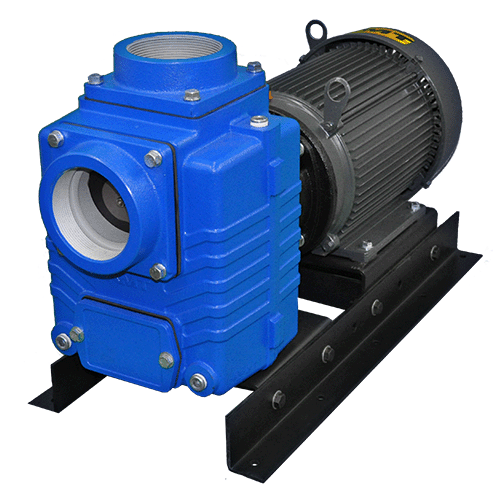
Walk into any water treatment facility or wastewater plant, and you’ll quickly realize that pumps are the heart of the operation. They move millions of gallons every day, operating around the clock to keep our water systems functioning. At AMED-US, we’ve spent years working with plant managers and engineers across North and South America, helping them optimize their pumping systems for maximum efficiency and reliability.
The reality is that pumping operations account for a massive portion of energy consumption in water and wastewater facilities. According to the U.S. Department of Energy, treatment plants could reduce annual energy use by 11 to 18 percent through improved system design and equipment upgrades. Water utilities are responsible for approximately 4% of the world’s total energy consumption, and centrifugal pumps play a central role in that equation.
We’ve seen firsthand how the right pump selection and configuration can dramatically reduce operating costs while improving system performance. This isn’t just about buying equipment; it’s about understanding how centrifugal pumps work in these demanding applications and making smart decisions that pay dividends for years to come.
Why Centrifugal Pumps Dominate Water and Wastewater Applications
Centrifugal pumps have become the workhorses of water and wastewater treatment for several compelling reasons. Their design is remarkably simple compared to other pump types, which translates to easier installation, lower maintenance costs, and longer service life. We regularly work with facilities that have centrifugal pumps operating reliably for decades with proper maintenance.
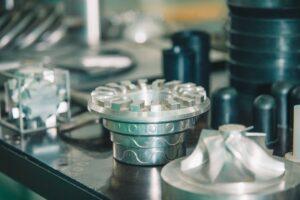
The operating principle is straightforward but effective. A rotating impeller creates centrifugal force that accelerates fluid outward from the center of the pump. This increases both velocity and pressure, allowing these pumps to move large volumes of water efficiently. The beauty of this design is its versatility, with centrifugal pumps handling flow capacities from a few gallons per minute up to 50,000 gallons per minute or more.
One critical advantage in wastewater applications is their ability to handle suspended solids without clogging. Unlike positive displacement pumps that can jam when encountering debris, properly designed centrifugal pumps with appropriate impeller configurations can pass solids effectively. This makes them essential for raw sewage pumping, primary sludge handling, and effluent discharge where solid content varies constantly.
Their efficiency at moving low-viscosity fluids like water is another key factor. Centrifugal pumps typically achieve efficiency ratings between 75% and 85% when properly sized and operated within their optimal range. Compare this to older or poorly matched equipment, and the energy savings become immediately apparent on monthly utility bills.
Understanding Efficiency in Pumping Systems
When we talk about pump efficiency with our clients, we’re really discussing three interconnected components: hydraulic efficiency, mechanical efficiency, and volumetric efficiency. Hydraulic efficiency relates to losses from liquid friction in the impeller and volute. Mechanical efficiency accounts for bearing friction, seal losses, and other mechanical components. Volumetric efficiency considers internal leakage through wear rings and clearances.
The overall efficiency of a centrifugal pump is the product of these three factors, and it varies significantly across the pump’s operating range. This is why understanding pump curves is absolutely critical for proper selection. A pump operating far from its best efficiency point (BEP) wastes energy and experiences accelerated wear.
We’ve worked with facilities where simply replacing an oversized pump with a properly sized unit reduced energy consumption by 30% or more. The temptation to oversize “just to be safe” is understandable, but it’s expensive. An oversized pump forced to run throttled or with reduced impeller diameter operates inefficiently and can experience problems like cavitation and excessive vibration.
Temperature affects efficiency too, though this is often overlooked. As fluid temperature increases, viscosity typically decreases, allowing for easier flow and improved pump performance. However, temperature also affects the materials in contact with the fluid and can impact seal life and component durability. This is particularly relevant in industrial wastewater applications where process temperatures may vary significantly.
Advanced Centrifugal Pump Technologies
The centrifugal pump hasn’t remained static over the decades. Manufacturers like Grundfos have continuously advanced the technology to meet modern efficiency and reliability demands. We distribute Grundfos pumps at AMED-US specifically because their innovations address real operational challenges our clients face daily.
Grundfos has developed their S-tube impeller technology that provides greater hydraulic efficiency than traditional wastewater impellers. This patented design prevents rags and fibrous materials from becoming stuck in the impeller while maintaining high efficiency. In a wastewater environment where wipes, rags, and other debris are increasingly common, this non-clogging capability is invaluable. The S-tube design delivers both the highest level of pump efficiency and best-in-class non-clogging performance.
Their SL and SE series wastewater pumps incorporate IE3-rated motors, improving motor efficiency and prolonging pump life. These pumps combine operational reliability with high total efficiency, offering what Grundfos describes as the lowest cost of ownership. The modular design allows for quick maintenance, with components that can be replaced without removing the pump from the installation.
Variable frequency drives (VFDs) have revolutionized centrifugal pump operations in water and wastewater facilities. A VFD adjusts motor speed to match actual system demand rather than running at full speed constantly. Industry studies show that VFDs can reduce energy consumption in wastewater pumping by 20% to 50% compared to fixed-speed systems. The energy savings follow the affinity laws, where power consumption is proportional to the cube of speed, meaning a 20% speed reduction can yield nearly 50% energy savings.
We’ve helped implement VFD systems at multiple facilities, and the results consistently exceed expectations. One wastewater plant we worked with saw a 30% reduction in energy per million gallons pumped after replacing constant-speed influent pumps with variable-speed units. The VFDs also extended seal life by operating pumps more gently during low-flow periods.
Optimizing Performance in Water Treatment
Municipal water treatment presents unique challenges for pumping systems. Raw water intake pumps must handle varying source water quality, from clear reservoir water to river water with seasonal sediment loads. Distribution pumps need to maintain steady pressure across networks that experience dramatic demand swings between nighttime low flow and peak morning and evening usage.
Centrifugal pumps excel in these applications when properly configured. Multi-stage pumps can generate the high pressures needed for distribution systems, with each stage adding incremental head to achieve total system requirements. Vertical turbine pumps work well for deep well applications, efficiently lifting water from underground sources.
Self-priming centrifugal pumps eliminate one of the traditional limitations of standard centrifugal designs. These pumps can evacuate air from the suction line and prime themselves without external assistance. This makes them ideal for applications where the pump is located above the water source or where frequent starting and stopping occurs. We’ve installed self-priming units at numerous lift stations and dewatering applications where this capability prevents operational headaches.
Energy efficiency in water distribution goes beyond just the pumps themselves. The entire system design matters. Proper pipe sizing reduces friction losses. Pressure management prevents both excessive energy use and water loss through leaks. According to research, reducing system pressure from 75 psi to 60 psi can save more than 530,000 gallons per year through a single half-inch leak. VFDs enable constant pressure control schemes that automatically adjust pump output to maintain optimal pressure regardless of demand fluctuations.
We always recommend evaluating the complete system when discussing efficiency improvements. Sometimes the most cost-effective solution involves multiple smaller pumps rather than one large unit. A three-pump configuration where pumps operate in duty, assist, and standby modes often provides better efficiency across varying demand conditions than a single large pump trying to handle everything.
Wastewater Applications and Challenges
Wastewater treatment places even more demanding requirements on pumping systems. Raw sewage contains not just water but organic matter, suspended solids, and increasingly problematic materials like wipes and rags that wreak havoc on pumps designed decades ago. The consequences of pump failure in wastewater applications are severe: overflows contaminate receiving waters, treatment processes are disrupted, and facilities face regulatory fines.
Submersible wastewater pumps have become the standard for many applications because they operate directly in the fluid being pumped. This eliminates priming concerns and reduces space requirements compared to dry-pit installations. Grundfos submersible pumps combine a sealed motor with the pump end in a single unit designed for continuous operation while fully submerged. Their robust construction handles abrasive particles, corrosive substances, and high solid content that would quickly damage less durable equipment.
Grinder pumps take a different approach by cutting up solids before pumping. The Grundfos SEG series, for example, includes a patented grinder system that ensures reliable operation even with challenging sewage containing fibrous materials. These 2 to 5.5 horsepower grinder pumps are built specifically for commercial, municipal, and industrial wastewater applications where untreated sewage must be handled effectively.
Aeration systems represent another major energy consumer in wastewater treatment plants, often accounting for 40% to 60% of total facility electricity use. While not pumps in the traditional sense, the blowers that provide aeration follow similar efficiency principles. VFDs on aeration blowers allow precise control to match actual oxygen demand rather than over-aerating. Facilities implementing VFD-controlled aeration have seen energy cost reductions of 26% or more by eliminating the over-aeration that’s common with fixed-speed systems.
Maintenance Strategies for Long-Term Efficiency
Even the most efficient pump loses performance without proper maintenance. We’ve seen facilities with excellent equipment specifications but poor maintenance practices that end up with higher operating costs than necessary. Regular preventive maintenance isn’t just about preventing catastrophic failures; it’s about maintaining the efficiency that equipment had when new.
Impeller wear gradually reduces pump efficiency. In abrasive service like wastewater with grit and sand, wear can be rapid. We recommend establishing baselines for flow, pressure, and power consumption when pumps are new, then monitoring these parameters regularly. When efficiency drops by 5% to 10%, impeller replacement typically makes economic sense even if the pump is still functioning.
Seal systems require attention in wastewater applications. External mechanical seals protect the motor from the pumped fluid, but they wear over time. Modern seal designs like the cartridge seals used in Grundfos pumps combine primary and secondary seals in a single assembly that’s quick to replace. This reduces maintenance time and ensures proper installation.
Motor protection through sensors has advanced significantly. Integrated moisture switches detect water infiltration before it damages motor windings. Motor temperature sensors warn of overheating conditions. Water-in-oil sensors on seal cavity lubrication provide early warning of seal failure. These monitoring capabilities, especially when connected to SCADA systems or remote monitoring platforms, enable predictive maintenance approaches that prevent unplanned downtime.
Cleaning cycles can extend time between major maintenance events. Some VFD systems include programmable cleaning or “de-ragging” sequences that periodically reverse pump direction or vary speed to dislodge debris. This simple strategy prevents many clogs before they become serious enough to require manual intervention.
Selecting the Right Pump for Your Application
Successful pump selection starts with accurately defining system requirements. What is the actual flow range needed, not just maximum flow but minimum and average flows throughout the day? What is the total dynamic head including static lift, friction losses, and pressure requirements at the discharge point? What is the nature of the fluid being pumped in terms of solids content, chemical composition, temperature, and viscosity?
For water treatment applications, we typically recommend starting with end-suction centrifugal pumps for smaller flows and pressures, split-case pumps for larger flows where high efficiency is critical, and vertical turbine pumps for well applications or where floor space is limited. Viking pumps offer excellent options for transfer applications, while Grundfos pumps dominate in wastewater with their specialized impeller designs and robust construction.
Material selection matters more than many people realize. Standard cast iron works fine for clean water applications but corrodes rapidly in certain industrial wastewaters. Stainless steel provides broad chemical resistance but at a higher initial cost. For extremely corrosive applications, exotic alloys or engineered plastics may be necessary. We help clients balance material costs against expected service life to identify the most economical long-term solution.
Don’t ignore hydraulic considerations. Net Positive Suction Head Available (NPSHA) in your system must exceed the pump’s Net Positive Suction Head Required (NPSHR) to prevent cavitation. Cavitation doesn’t just reduce efficiency; it physically damages pump components through the collapse of vapor bubbles. Proper suction piping design, minimizing elbows and ensuring adequate pipe diameter, helps maintain sufficient NPSHA.
Energy Management and Cost Reduction
Energy represents the largest operating cost for most pumping systems over their lifetime. Purchase price might be 15% of total lifecycle cost, with energy consumption accounting for 60% to 70% and maintenance making up the remainder. This is why focusing solely on initial cost is shortsighted. An investment in higher-efficiency equipment or VFDs typically pays back within 2 to 4 years through energy savings alone.
Many utilities and government agencies offer incentives for energy-efficient equipment upgrades. We help clients identify available programs and complete necessary documentation to access these funds. The combination of energy savings and utility incentives often makes efficiency upgrades financially attractive even with limited capital budgets.
Monitoring and measurement enable continuous improvement. Installing flow meters, pressure sensors, and power monitoring provides the data needed to calculate system efficiency and identify degradation over time. Modern pump controllers from manufacturers like Grundfos integrate these measurements and can log data for trending and analysis. Some even connect to cloud-based platforms for remote monitoring and diagnostics.
Demand-based control strategies optimize energy use by running pumps only as needed. Wet well level control in wastewater lift stations, pressure-based control in water distribution, and flow-proportional control in treatment processes all ensure that pumps operate only when and as much as required. Combined with VFD speed control, these strategies eliminate the waste inherent in fixed-speed pumps running constantly or cycling on and off frequently.
Working With AMED-US for Your Pumping Needs
We’ve built our reputation at AMED-US by understanding that every facility has unique requirements. A municipal wastewater plant faces different challenges than an industrial pretreatment facility or a remote lift station. Our team of licensed engineers takes time to understand your specific situation before recommending solutions.
Our partnerships with leading manufacturers including Grundfos, Baldor, ABB, WEG, and Ruhrpumpen give us access to the industry’s best technology. We’re not limited to a single brand or product line, so we can honestly recommend the equipment that truly fits your application rather than forcing a particular solution to work.
Our support extends well beyond equipment delivery. We provide installation assistance, startup commissioning, operator training, and ongoing maintenance services. With teams in Miami, Medellin, Santiago, and Guayaquil, we serve clients throughout the United States, Latin America, and the Caribbean with localized support that understands regional requirements and regulations.
We also offer comprehensive system evaluations for existing facilities looking to improve efficiency. Our engineers can analyze current operations, measure actual performance, identify opportunities for improvement, and develop detailed recommendations with projected savings. These assessments have helped numerous clients justify capital investments through clear documentation of expected returns.
The Future of Pumping Efficiency
Technology continues advancing, bringing new opportunities for efficiency improvements. Smart pump systems with integrated sensors and connectivity enable predictive maintenance approaches that prevent failures rather than just responding to them. Machine learning algorithms analyze operating patterns to optimize control strategies automatically. Improved materials and coatings extend equipment life in harsh environments.
Energy storage and demand response programs are becoming more sophisticated. Facilities can potentially reduce costs by shifting pumping loads to off-peak periods when electricity rates are lower. Battery storage systems can provide backup power while also enabling strategic load management. These strategies require pumping systems with the flexibility to operate on varied schedules, which VFD-equipped centrifugal pumps provide naturally.
Sustainability is driving changes in how we think about water and wastewater systems. Energy efficiency directly reduces carbon footprint and operating costs simultaneously. Water conservation through leak detection and pressure management extends limited water resources. The pumps and control systems we install today need to support these evolving priorities while maintaining the reliability that utilities demand.
Making the Right Decision
Improving efficiency in water and wastewater operations through better pumping systems isn’t a one-time project. It’s an ongoing commitment to properly sizing equipment, maintaining it effectively, monitoring performance, and making upgrades when technology advances or systems change. The facilities that achieve the lowest operating costs are those that treat their pumping systems as critical infrastructure deserving continuous attention.
Start by understanding what you have today. Document current equipment, measure actual performance, calculate operating costs, and identify pain points whether that’s excessive energy use, frequent maintenance, or reliability concerns. This baseline makes it possible to quantify improvements and justify investments.
Consider the complete system rather than just individual pumps. Piping, valves, controls, and system configuration all impact efficiency. Sometimes the best solution involves multiple changes working together. Adding a VFD to an oversized pump helps, but right-sizing the pump and adding a VFD provides even better results.
Work with partners who understand both the technology and the applications. At AMED-US, we’ve seen what works and what doesn’t across hundreds of installations. Our experience helps clients avoid expensive mistakes and implement solutions that deliver promised performance in real-world conditions.
Ready to improve efficiency in your water or wastewater facility? Browse our comprehensive selection of industrial pumps including Grundfos centrifugal pumps, submersible wastewater pumps, and complete pumping systems. Or contact our team for a personalized consultation. We’ll help you identify opportunities for energy savings, reliability improvements, and cost reduction while ensuring your systems meet all operational and regulatory requirements.